

Buying a Bellway Home? What a Snagging Survey Finds
Author
Ian Murray
Date Published
Bellway completed 9,695 new homes during its latest financial year, an increase of 10.8% from the 8,749 properties completed the previous year. That makes Bellway one of the largest new-build developers in the UK, with thousands of buyers moving into its homes every year.
Increased completions do not automatically mean reduced quality. However, when homes are being delivered at scale across numerous developments, the standard of workmanship can vary between individual properties, trades and plots.
A professional home snagging survey provides an independent assessment of the property you are actually buying. It can identify cosmetic defects, incomplete work and more significant concerns that may not be obvious during a developer handover.
Do Bellway Homes Need a Snagging Survey?
Every newly built property should meet the relevant regulations, warranty requirements and standards of finish. However, this does not mean that every element of the home will be completed correctly when the keys are handed over.
New-build home inspections regularly uncover problems that buyers would struggle to identify themselves. These can range from poor decoration and damaged fittings to defects involving brickwork, roofing, insulation, ventilation and drainage.
A snagging survey is not an accusation against the developer. It is an independent quality check designed to establish whether your individual property has been completed to the standard you were promised.
What Does a Bellway Snagging Survey Check?
A professional Bellway home snagging survey should cover the inside and outside of the property. The inspector will assess visible workmanship, finishing quality and areas where the completed work may not meet the expected standard.
At Home Snagging UK, our new-build home inspections can include the following areas.
External Brickwork, Pointing and Finishes
The external inspection looks at the brickwork, mortar joints, pointing and general finish of the property. Inspectors check for damaged bricks, inconsistent pointing, unfinished detailing and areas where the workmanship requires further attention.
External fittings, vents, pipework and seals around windows and doors should also be examined. Smaller defects can be easy to overlook during a viewing, particularly when access around the property is restricted.
The inspector will also look at external levels, pathways and areas where water could collect against the property.
Roofing, Guttering and Drainage
Roof defects are not always visible from ground level. A professional snagging inspection can assess visible tiles, ridge details, roof edges, flashing, guttering and rainwater fittings.
Where appropriate, drone photography can provide a clearer view of areas that would otherwise be difficult to inspect safely. This may identify slipped or damaged tiles, unfinished detailing and problems around roof penetrations.
Gutters and downpipes should direct rainwater away from the property correctly. The inspection can also highlight poorly positioned outlets, defective joints, standing water and concerns with external drainage.
Windows, Doors and Joinery
Windows and doors should open, close and lock correctly. They should also be properly aligned, sealed and free from avoidable damage.
Common issues found during new-build home inspections include poorly adjusted doors, gaps around frames, damaged surfaces and inconsistent finishing. Internal joinery such as skirting boards, architraves, stairs and fitted storage should also be checked.
A door that catches slightly during the handover may appear minor, but it should still be recorded. A detailed home snagging report ensures that smaller defects are not forgotten once more obvious problems begin to receive attention.
Walls, Ceilings, Flooring and Decoration
The internal inspection assesses the general finish throughout the home. This includes walls, ceilings, floors, paintwork, plastering and decorative finishes.
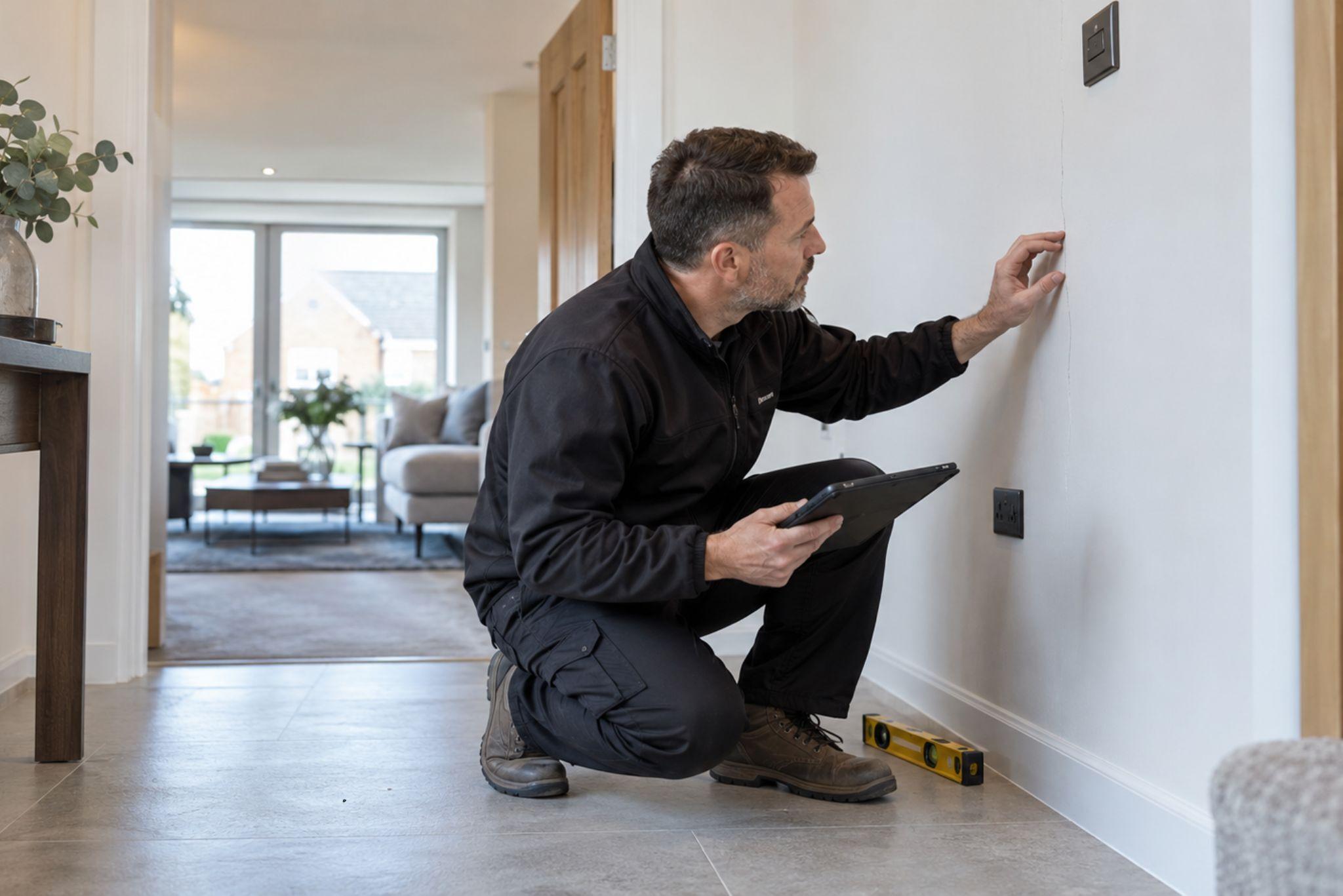
Inspectors may identify uneven surfaces, visible repairs, cracking, paint defects, marks, chips and incomplete finishing. Flooring should also be checked for damage, poor fitting and excessive movement.
Some cosmetic snags may appear relatively small when viewed individually. Across an entire property, however, the time and cost required to correct them can quickly add up.
Kitchens and Bathrooms
Kitchens and bathrooms contain numerous fittings, seals, doors, worktops and connections. Even a well-presented room can contain defects that are not immediately obvious.
A new-build snagging inspection will assess the finishing around units, worktops, sanitaryware and visible pipework. It can identify poorly applied sealant, damaged surfaces, misaligned doors, loose fittings and incomplete work.
Showers, baths, basins and toilets should also be visually checked for secure installation and suitable sealing. Any visible signs of leakage, damage or poor workmanship should be included within the snagging report.
Loft Insulation and Ventilation
The loft is one of the most important areas of a new-build home inspection. Many buyers never inspect it during the purchasing process, allowing incomplete insulation and other defects to remain hidden.
The inspector can assess the visible insulation coverage, roof space and ventilation. Gaps, compressed insulation and poorly finished areas can reduce the thermal performance of the home. Thermal imaging may also help identify temperature differences and potential insulation defects that are not visible during an ordinary inspection. It should be used alongside the physical assessment of the property.
Plumbing, Heating and Electrical Finishes
A snagging survey is not a substitute for a full specialist electrical, gas or drainage investigation. However, it should assess visible fittings and identify obvious problems that require further attention. This may include loose sockets, damaged fittings, unfinished pipework, leaking connections or poorly installed controls. Radiators, extractor fans and other accessible components can also be checked as part of the wider property inspection.
Where a potential specialist problem is identified, the report can recommend that it is investigated by a suitably qualified professional.
A Real Bellway Home Snagging Inspection in Hull
Home Snagging UK recently completed a post-completion inspection at a three-bedroom Bellway property on the Trident Way development in Hull.
The homeowner had already moved into the property and wanted reassurance that it had been completed correctly. Our inspection covered the internal and external areas of the home, including the brickwork, roofing, drainage, doors, windows, joinery, kitchen, bathrooms, loft and insulation.
The inspection identified a combination of cosmetic defects and more detailed workmanship concerns. These included issues with brickwork finishing, pointing, roof elements, external fittings, decoration, door alignment and finishing within the kitchen and bathrooms. The homeowner received a clear photographic report that allowed the issues to be raised with the developer in an organised way.
You can read the full Bellway home snagging inspection case study in Hull to see how an independent post-completion inspection helped the customer understand the condition of their new home.
Does Every Bellway Property Have the Same Snags?
No. The defects found in one Bellway property should not be treated as evidence that every Bellway home has the same problems.
New-build quality can vary between developments and individual plots. Different contractors and tradespeople may also work on separate phases of the same development.
This is why a generic checklist cannot replace a professional inspection. A home snagging survey assesses the workmanship and condition of your specific property rather than making assumptions based solely on the developer’s name.
When Should You Book a Bellway Snagging Survey?
The ideal time will depend on the stage of your purchase and the access permitted by the developer. A pre-completion inspection can be carried out before legal completion where access is available. This gives the developer an opportunity to address identified defects before the homeowner moves in.
If you have already received the keys, a post-completion snagging survey can still be extremely valuable. It creates a detailed record of the condition of the property and helps you report defects within the relevant developer and warranty periods.
Homeowners can also arrange a de-snag inspection after repairs have been completed. This checks whether the original issues have been corrected properly and whether any defects remain outstanding.
Why Use an Independent New-Build Home Inspector?
The developer’s own quality checks are carried out on behalf of the developer. An independent inspector works for the buyer and assesses the property from the homeowner’s perspective.
Professional inspectors understand where new-build defects are commonly found and know which parts of the property require closer attention. They can also describe each issue clearly and provide photographic evidence within a structured report.
This makes it easier to submit the findings to the developer, monitor the repairs and maintain a record of what has been reported.

a month ago
Highly recommended Keith to complete a post completion snagging survey. He clearly has a wealth of knowledge and spotted things I wouldn’t have even noticed. We can go to our builder now, with peace of mind that our new home can be fixed appropriately to help it last for years. Julie was also extremely accommodating with moving dates when our completion date kept getting moved. Thank you!
Professional Bellway Home Snagging Surveys
At Home Snagging UK, we provide independent home snagging surveys for Bellway properties and other new-build homes across the UK.
Our inspections cover the visible internal and external areas of the property. Thermal imaging and drone photography are included where appropriate, helping us investigate insulation, roofing and other areas that may not be accessible during a basic visual check.
Following the inspection, you will receive a comprehensive new-build snagging report with clear descriptions and photographic evidence. Reports are normally delivered within 24 hours, allowing you to raise the identified issues with your developer promptly. Whether you are preparing to complete on a Bellway home or have already moved in, our experienced team can provide an independent assessment of the property you have purchased.
Contact Home Snagging UK to arrange a professional Bellway snagging inspection and move into your new home with greater confidence.
Frequently Asked Questions
Do I need a snagging survey when buying a new Bellway home?
A snagging survey is not legally required, but it can identify defects that may be missed during the developer’s handover process. An independent inspection provides a detailed assessment of your individual property and gives you a written record to submit to Bellway.
What does a professional snagging survey check in a Bellway home?
A professional snagging survey checks visible internal and external workmanship. This can include brickwork, roofing, drainage, windows, doors, joinery, decoration, flooring, kitchens, bathrooms, loft insulation and visible plumbing or electrical fittings.
What defects are commonly found during a Bellway home inspection?
The findings will vary between properties. New-build home inspections can identify cosmetic defects, damaged finishes, poorly aligned doors, incomplete sealant, brickwork and pointing concerns, roof defects, insulation gaps and unfinished work.
Will Bellway accept an independent snagging report?
An independent snagging report can be submitted to Bellway when reporting defects. Whether each item is accepted for repair will depend on the nature of the issue, the relevant standards and the terms of the developer or warranty cover.
When is the best time to arrange a snagging survey for a Bellway property?
A snagging survey can be arranged before completion if the developer permits access. It can also be completed after handover, allowing the homeowner to identify and report defects after receiving the keys.
Can I book a Bellway snagging inspection after moving in?
Yes. A post-completion snagging inspection is designed for buyers who have already moved into their new home. It can identify visible defects and provide a comprehensive report for raising the issues with the developer.
Does a new-build warranty replace a snagging survey?
No. A warranty may provide protection against certain defects, but it does not provide a complete room-by-room inspection of the finished property. A snagging survey is intended to identify workmanship, finishing and installation issues within your individual home.
How many snags are normally found in a new Bellway home?
There is no standard number because every property is different. The number and seriousness of defects can vary according to the plot, development, contractors involved and quality of the final finishing.
Can a snagging inspection find missing insulation?
A physical loft inspection and thermal imaging may identify visible gaps, compressed insulation or unusual temperature differences. Some concealed areas cannot be fully assessed without further investigation, but a professional inspection can identify warning signs that require attention.
Can Home Snagging UK check whether Bellway has completed the repairs?
Yes. A de-snag inspection can check whether previously reported defects have been repaired properly. It can also identify outstanding work and issues that may still require attention.
More from Home Snagging UK

After Heavy Autumn Rain: 10 New-Build Defects to Check
Has heavy autumn rain exposed problems in your new build? Check these 10 common leaks and drainage defects and learn how home snagging can help.
New-Build Snagging Complaints Have Tripled
New-build complaints have tripled. Learn how photos, written records and professional home snagging reports can create a stronger evidence file.